the training
Workshop Structure Torino 25/11/2025
THE CONCEPT: "Dove il silenzio nasconde più delle parole" ( Where the silence conceals more than words)
Participants: 4 Deaf participants (we aim for different ages and genders) + 2 interpreters + 1 curator/facilitator
Duration: 3 hours (180 min)
Goal: Explore the emotional connection between art and Deaf life experience while generating design ideas for better Deaf inclusion in museums.
The experience is not a LEGO® workshop, but a triad of three worlds — the Facilitator, the Deaf person (the lived experience), and the Interpreter (the bridge). LEGO® is no longer the focus; it’s a translation tool—a tactile way to externalize emotion and design ideas without needing sound.
The core idea: Each session creates two outcomes from the same creative act:
- Emotional narrative – how a chosen artwork mirrors the Deaf participant’s personal story or emotion.
- Service insight – what the museum can learn from that story to design a new experience, space, or communication for Deaf audiences.
In this workshop, a Deaf visitor chooses one artwork. Through sign, gesture, and building, they reveal two layers:
- Inner reflection: what emotion or memory does the artwork awaken?
- Outer offering: what message or service they wish the museum would create to connect Deaf audiences with art on their own sensory terms.
“Visual-kinesthetic methods create an emotional opening that helps Deaf participants explore identity, express complexity, and gain confidence in unfamiliar creative territories.”
OUTCOME
This becomes a two-way service design laboratory:
- For the museum: a portfolio of tangible emotional insights that inform future accessibility and engagement design.
- For the Deaf participants: a process of recognition—seeing themselves not as visitors needing adaptation, but as cultural co-authors of the museum’s future.
The Curator/Facilitator listens and observes—not to interpret, but to witness.
The Interpreter carries the pulse of the dialogue between languages, ensuring that emotion doesn’t get flattened by translation.
The LEGO® model becomes a bridge—part sculpture, part map of feelings and ideas.
- It blends a proven open-discussion art method (Visual Thinking Strategies) with a proven hands-on meaning-making method (LEGO® Serious Play). That combination reliably draws out multiple interpretations, evidence-based reasoning, and equal participation.
- It centers Deaf perspectives as knowledge, not “access add-ons,” consistent with Deaf Gain scholarship and participatory museum practice.
- It leaves a tangible policy trail (the one-line asks) and accessible digital assets your comms team can publish—now increasingly required by EU rules.
“For Deaf individuals, visuality is not a preference — it is the infrastructure of cognition and emotion. In this project, visual metaphors, 3D models, and artworks became vehicles for interior truth. This confirms that emotional literacy in Deaf spaces is tactile, visual, embodied, and symbolic.”
STRUCTURE
Phase 1 - Arrival & Warm-Up (0 → 30 min)
Objective: Create trust, activate senses.
- Welcome to a sign-first environment (interpreter voices only if needed).
- LEGO model building: everyone builds a “Duck” mini LEGO sculpture.
- The facilitator explains that LEGO® is a storytelling tool, not a test, and points to the diversity of models, which is precisely what we are looking for: a personal interpretation.
Deliverable: each participant builds a Duck, and we explain the concepts of diversity, openness, and freedom of speech to express themselves.
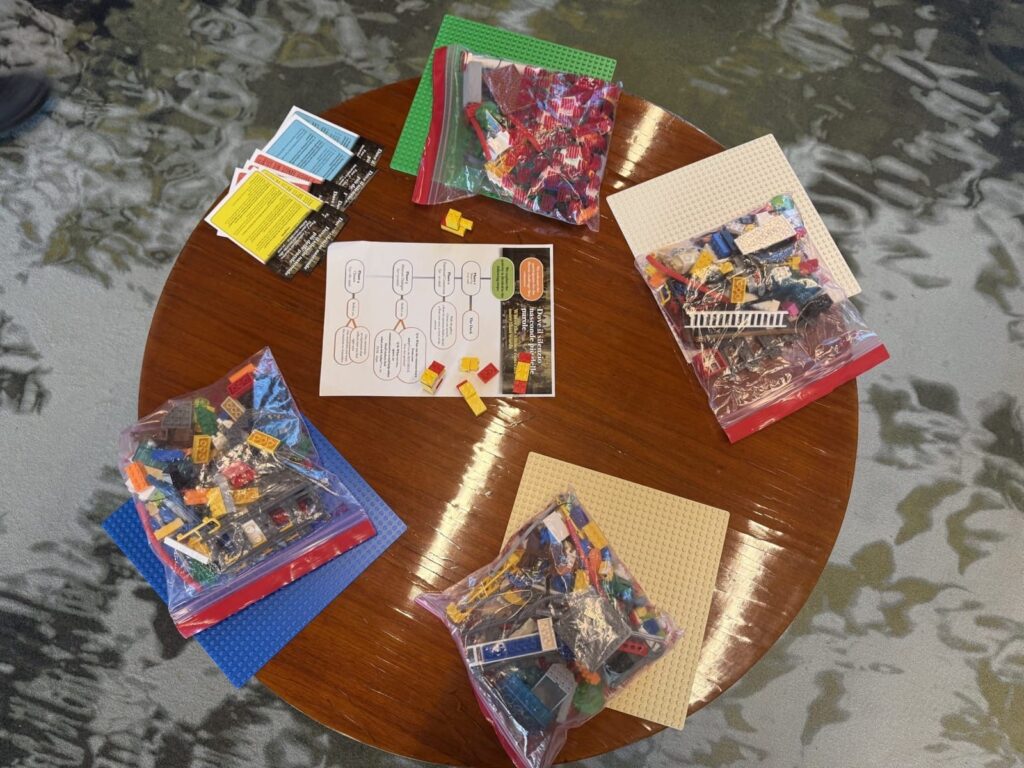
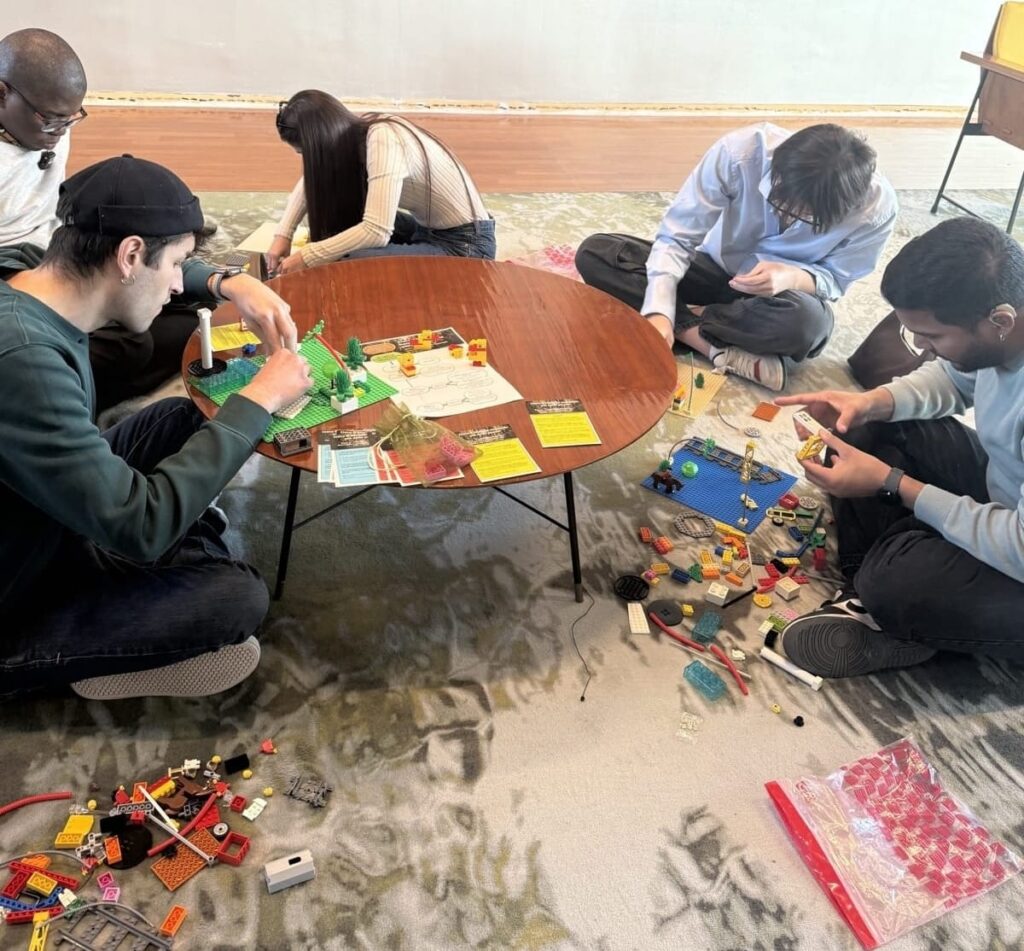
"LEGO allowed me to use my creativity, to choose colors, shapes, and more... and so I broadened and expanded my imagination, giving the work a personal interpretation. We, deaf people, are very visual in our imagination; we imagine in 3D, not with a flat 2D drawing. In 3D, LEGO is therefore suitable for us".
Phase 2 – Emotional Connection (30 → 90 min)
We invite participants to a short walk in the gallery: each participant explores artworks and selects one piece that resonates emotionally.
Deliverable: each participant has chosen an artwork and built a model that resonates emotionally to explain it later. Each participants get an A5 piece of cardboard with the following questions:
Objective: Translate emotion into a tangible story.
- At tables near the chosen artwork (or photos of it):
- “When you look at this artwork, what stirs inside you?”
(Shifts focus from ‘feeling’ as a label to ‘inner movement’—encouraging participants to describe sensations, not just emotions.) - “Can you recall a time in your life that carries a similar rhythm or emotion?”
(Links the artwork’s emotional tone to lived experience through metaphor—“rhythm” allows both Deaf and hearing participants to connect through visual or kinetic memory.) - “If this emotion could take form in space—through shape, color, or motion—how would it appear?”
(Invites multimodal imagination—ideal for Deaf participants, who may think in visual-spatial terms rather than purely verbal categories.)
Together, these move from perception → memory → embodiment, aligning with psycholinguistic models of emotional expression (like Lakoff & Johnson’s embodied metaphor theory).
They also translate well into sign language, because each question naturally lends itself to spatial mapping, rhythm, and gesture.
- Build for 15 minutes in silence.
- Sharing in sign (interpreter audio recorded).
- The facilitator listens and takes emotion keywords that later inspire design ideas.
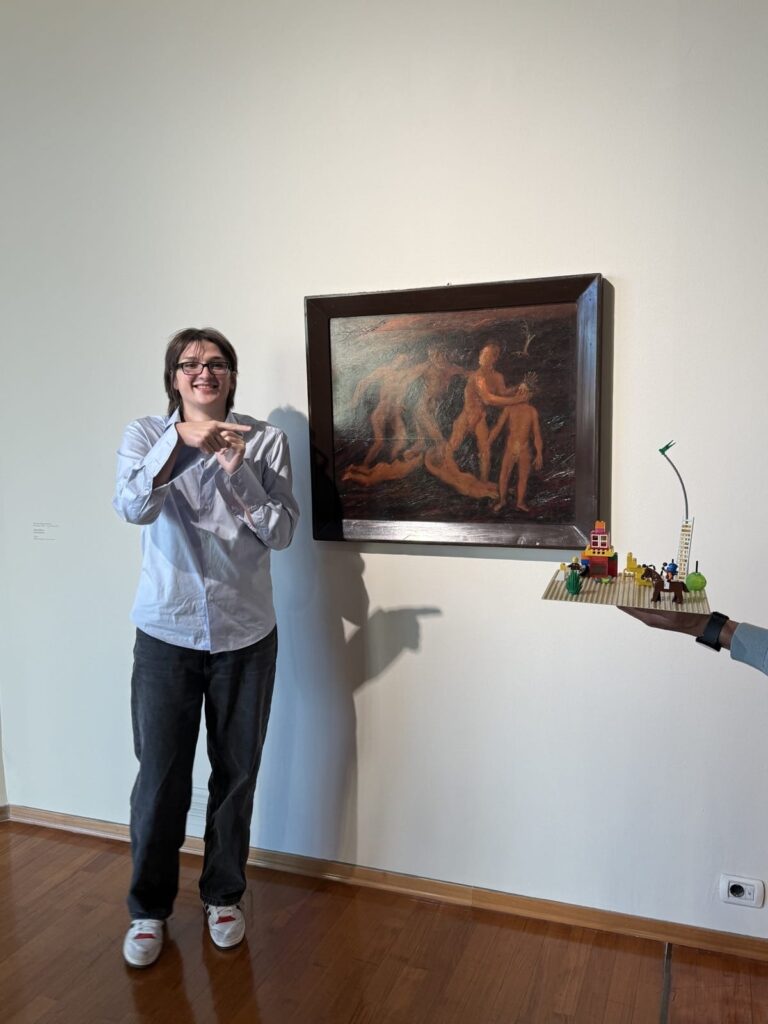
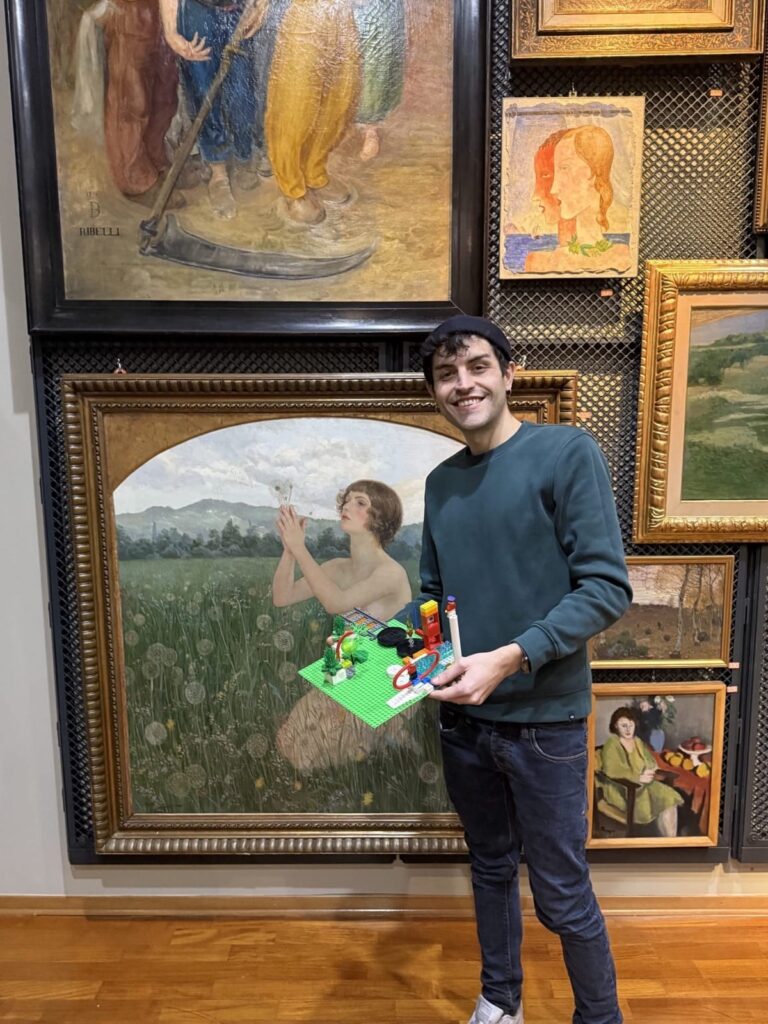
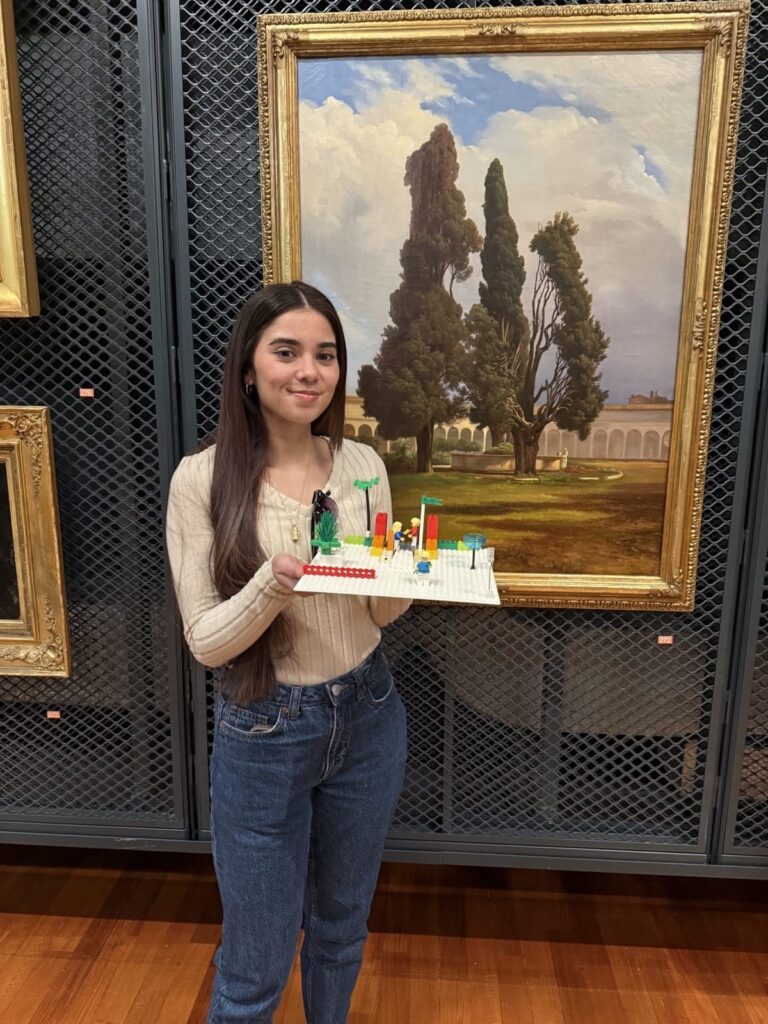
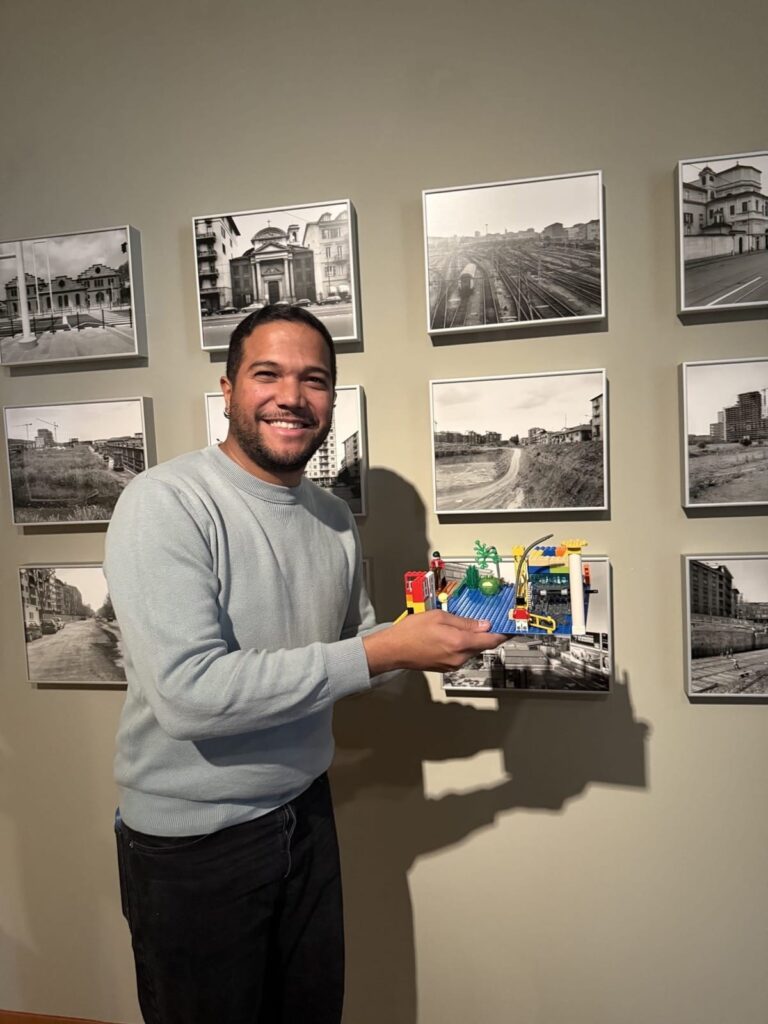
Deliverable: each Deaf participant has an emotional LEGO® model and a signed reflection (video if allowed).
"Having the opportunity to have this experience, to see these different forms of art, gave me a chance to understand art, and also a strange emotion, partly because there are so many that represent death and violence, like some of the ones we saw there, and also the explanations Diana gave about the body and all the diversity. It made me feel a lot of things because I'm not used to these things."
Phase 3 – Museum Dialogue (90 → 150 min)
Objective: Transform emotion into museum insight.
- Q A: What can the museum learn from your story?
- Q B: What service, space, or communication would help other Deaf visitors feel what you felt today?
- Participants modify their models or add one element showing this offer.
- The facilitator and interpreter discuss each insight aloud to ensure it’s understood both emotionally and practically.
Deliverable: clear “service design note” per participant (e.g., sign-first tour, quiet visual zone, tactile replica, Deaf-curated label).
Phase 4 – Closure (150 → 180 min)
“The Dandelion metaphor is not accidental. It carries the emotional weight of a community repeatedly uprooted, dismissed, and silenced. “We were treated as defective flowers. We were pulled out of the meadow. But we are resilient. We return. We bloom anyway.”“You are not alone. You are not defective. You are not invisible. Come, I will teach you what no one taught you.”
Objective: Reflect and capture next steps.
- Group reflection circle:
- One gesture to describe how you feel now.
- One word/idea you want the museum to remember.
- Quick photos of models + notes.
- Thank-you acknowledgment and consent for exhibition or documentation.
Deliverables:
- 4 photographed LEGO models
- 4 short insight notes
- Optional 3-minute signed videos
- Sign language facilitator 3-minute feedback insights of the experience
OUTPUTS FOR REPLICATION
- Emotional Archive: video or photo log of the builds and stories.
- Museum Insight Sheet: 1 page listing all participant recommendations.
- Mini-exhibit: each model shown with an image of the chosen artwork and a QR code linking to the signed story.
KEY PRINCIPLES
- Sign-first: interpreter follows Deaf participants, not the curator.
- Silence as space: moments of quiet observation are intentional and powerful.
- Emotion → Design: every feeling becomes a design proposal.
- Equality: Facilitator is a listener, not an authority.
“For the first time, art was explained in her language—sign language. She felt recognised. Included. Seen.”
“A Deaf community led by its own role models, empowered through visual identity.”
"In reality, there is more than one deaf person who has made it and serves as a model for the deaf community".
“Facilitators must treat every metaphor, every LEGO structure, and every artistic choice as a window into the participant's inner world.”
"I want to go into a museum as if I were a hearing person, so I want to go in and have everything ready, without having to bring anything privately."
"I would like to see more interpreters in all workplaces, good interpreters, professional interpreters, truly inclusive interpreters, who can work together with deaf people and do this as a team, all together. Who has a beautiful, clean sign language, not a weak, dirty sign language."
Workshop structure designed by Daniel Weiss -Stichting Eduagility implementation at the GAM with the L’Istituto dei Sordi di Torino- Enrico Dolza -Director.
Participants:
- Nicola: Deaf teacher and artist in deaf art, 32 years old, Italian, from a deaf family
- Miguel: deaf educator, 30 years old, Venezuelan refugee with international protection, background as economics and administration in his country, hearing family
- Vania: VET student, 24 years old, hearing family
- Alison: migrant from Panama, assistant for deaf-blind seniors, 29 years old, deaf family